Dressing for Your Body in Your 70s: What Actually Works
Disclosure: This page contains affiliate links, and I earn a commission when you buy through them at no extra cost to you. As an Amazon Associate I earn from qualifying purchases. I also work with Commission Junction and Rakuten Advertising. I write everything here myself with some help from AI.
Dressing for your body in your 70s is not about hiding anything. It is about understanding what you are working with right now and choosing clothes that work with your body instead of against it.
I want to be clear about something before we go any further. This is not a post about problem areas. I do not believe in that language and I am not going to use it. Every body has its own particular shape and proportions and the goal of dressing well is simply to understand yours and work with it intelligently.
That is it. No shame, no hiding, no apology. Just smart dressing.
Table of Contents
Why Dressing for Your Body in Your 70s Is Different
Our bodies change over the decades and by our 70s most of us are working with a body that looks and behaves quite differently than it did at forty or fifty. Shoulders may be slightly narrower. Waists have shifted. Busts have changed. Hips have redistributed.
None of that is a problem. It is just information.
The mistake most women make is continuing to dress for the body they had thirty years ago instead of the body they actually have right now. They reach for the same silhouettes that worked in their fifties and wonder why they do not look quite right anymore. The body changed but the dressing strategy did not.
Update the strategy. Your body right now deserves clothes that work for it right now.
Understanding Your Current Proportions
Before you can dress well for your body you need to spend a little time honestly understanding your current proportions. This does not require a tape measure or a chart. It just requires paying attention.
Stand in front of a full length mirror in fitted clothing and look at yourself honestly and kindly. Where is your body widest? Where is it narrowest? Where do you feel most confident? Where do you feel less so?
Most women over 70 fall into one of a few general proportion categories. Broader shoulders with narrower hips. Narrower shoulders with fuller hips. A fairly even distribution from shoulder to hip with a less defined waist. Understanding which of these is closest to your current shape gives you a starting point for knowing which silhouettes will work best for you.
Silhouettes That Work Beautifully for Most Women Over 70
Rather than prescribing specific rules for specific body types I want to share the silhouettes that consistently work well across a wide range of proportions for women in their 70s.
The A line. An A line skirt or dress skims the hips and flares gently toward the hem. It creates a clean line from waist to hem without clinging anywhere. It is universally flattering across virtually every body type and it looks polished and feminine without trying too hard.
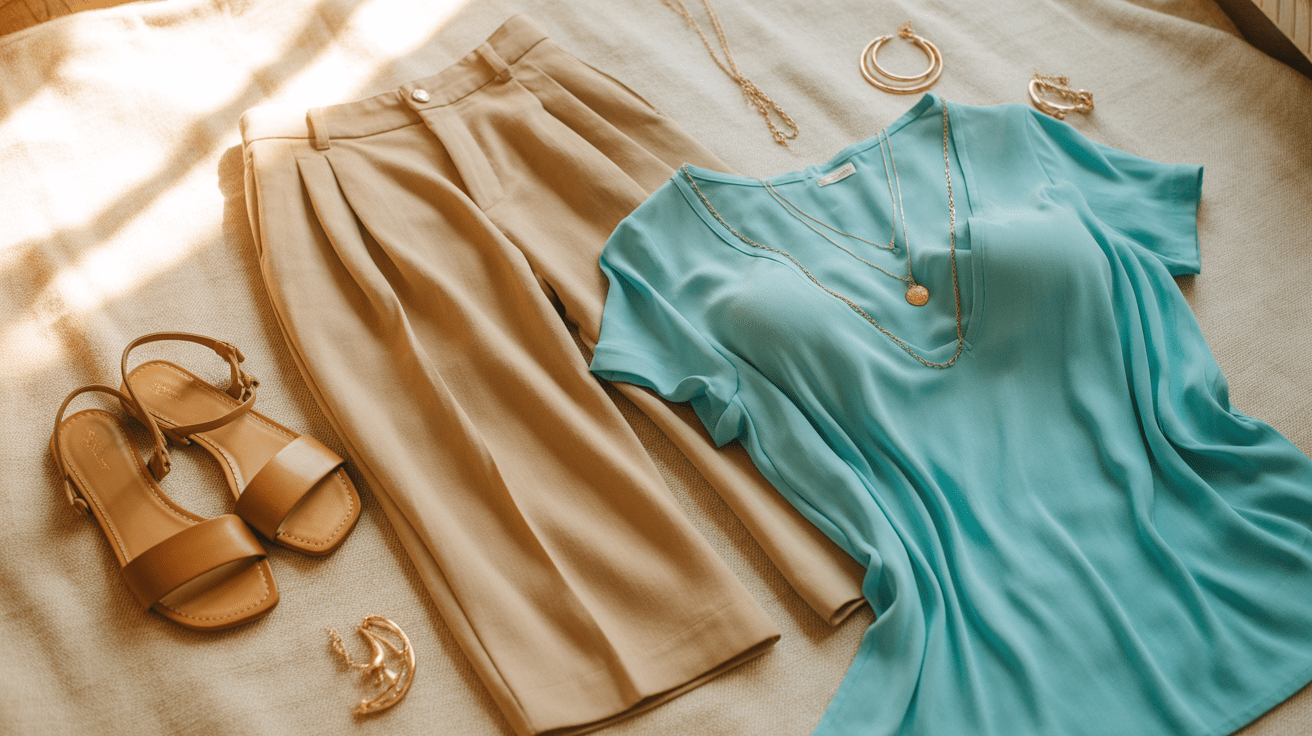
Wide leg and straight leg trousers. These create a long clean vertical line from hip to floor. They do not cling, they move beautifully, and they work for almost every proportion. The key is getting the length right. They should just skim the floor in flats or hit exactly at the ankle.
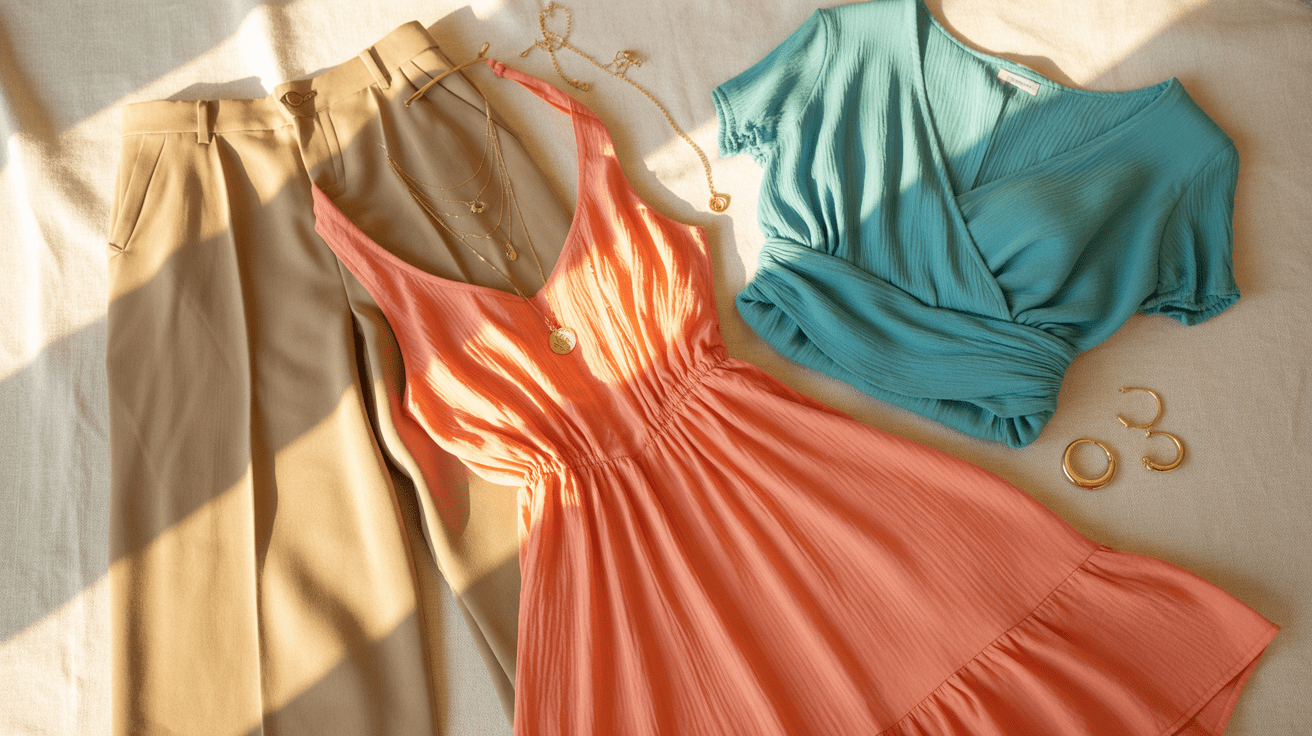
Wrap styles. Wrap tops and wrap dresses are adjustable, accommodating, and endlessly flattering because they tie at the natural waist which creates definition regardless of where your waist currently sits.
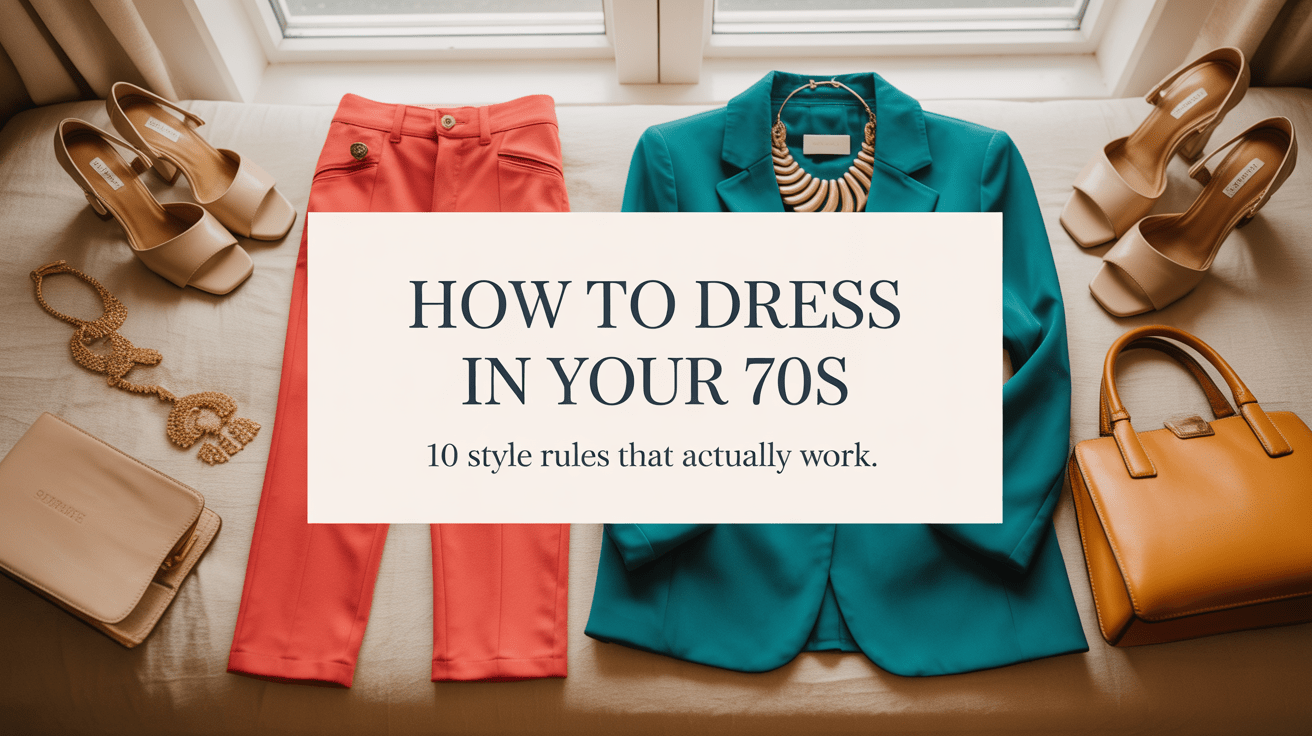
Structured blazers and open cardigans. These create vertical lines and add structure above the waist which draws the eye up and elongates the overall silhouette. They are also endlessly versatile and add instant polish to any outfit underneath.
Dressing for Your Coloring in Your 70s
Your coloring is the combination of your skin tone, your hair color, and your eye color working together. And in your 70s if you have silver or white hair your coloring palette has likely shifted from what it was when your hair was its natural color.
This matters because the colors that were most flattering on you at forty may not be the same colors that are most flattering now. Silver and white hair changes everything about how color interacts with your face.
Here is the good news. Silver and white hair opens up a completely stunning range of colors that work beautifully.
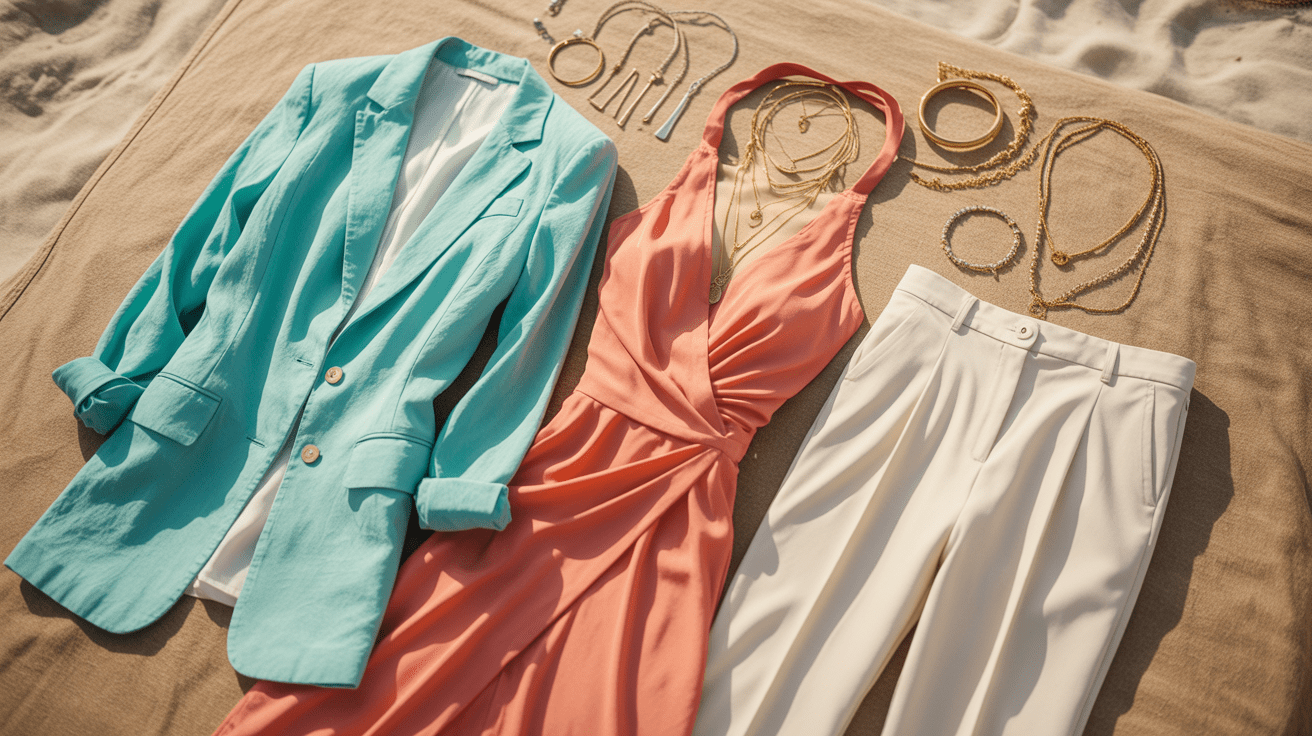
Jewel tones look absolutely extraordinary against silver hair. Deep teal, rich sapphire, emerald, amethyst. The contrast between the richness of the color and the softness of silver hair is genuinely beautiful.
Warm corals and peachy tones bring warmth and glow to your face in a way that is universally flattering and especially lovely against silver hair.
Rich warm reds and burgundies create a striking and timeless contrast with silver hair that photographs beautifully and commands a room.
Warm whites and ivory rather than stark white tend to be more flattering for most skin tones. Stark white can wash out some complexions while ivory and warm white add warmth and luminosity.
The colors to approach with a little more caution with silver hair are the ones that drain color from your face. Pale pastels, muddy browns, and some greys can make you look washed out rather than luminous. Hold them up near your face in natural light before committing.
The Mirror Test That Never Fails
After all the theory I want to give you one simple practical tool that works every single time.
Before you leave the house take one honest look in a full length mirror in natural light if you can manage it. Ask yourself one question. Does this look like I chose it completely on purpose?
Not does it look expensive. Not does it follow the rules. Does it look intentional. Intentional always reads as stylish. Intentional means you know what you are doing and you are completely at peace with it.
If the answer is yes walk out the door. If something feels slightly off trust that feeling and change the one thing that is nagging at you. It usually takes about thirty seconds to fix.
That is the whole secret. Know your body, know your colors, choose intentionally, and walk out like you mean it.
Ready for all ten of Wanda’s style rules? Head back to the full guide: How to Dress in Your 70s: 10 Style Rules Wanda Actually Lives By and save it to your Pinterest boards for easy reference anytime.