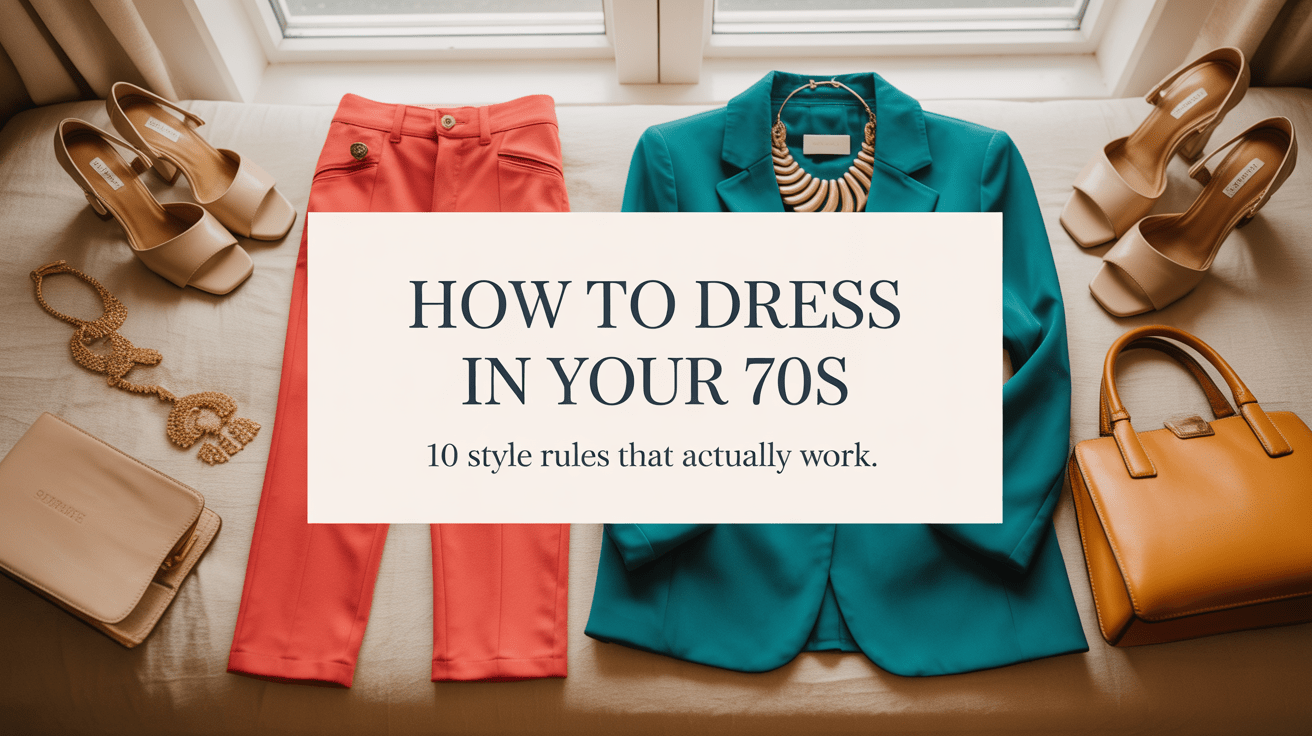
How to Dress in Your 70s: 10 Style Rules Wanda Actually Lives By
Disclosure: This page contains affiliate links, and I earn a commission when you buy through them at no extra cost to you. As an Amazon Associate I earn from qualifying purchases. I also work with Commission Junction and Rakuten Advertising. I write everything here myself with some help from AI.
Nobody handed me a rulebook when I turned 70.
And honestly? Thank goodness for that. Because figuring out how to dress in your 70s should never feel like following someone else’s rules. The advice I would have gotten back then was probably all wrong anyway. Cover up more. Tone it down. Act your age. Wear sensible shoes and be grateful for them.
No, thank you.
I am in my 70s. Born and raised in Houston, TX, and lived in the Florida Keys for 40-plus years. I was raised to be put together before I go anywhere. I tend to wear comfortable, stylish outfits that make people stop me in parking lots. I have a deep and abiding love for jewelry, Chico’s, and I have never once left the house in something that made me feel comfortable and confident.
That is not an accident. That is a practice.
Here is what I have learned after more than seven decades of getting dressed every single morning: the women who look the most incredible in their 70s are not the ones following the most rules. They are the ones who figured out who they are, what works for their body, and stopped apologizing for wanting to look good.
Style does not have an expiration date. It just gets more interesting.
I put together these 10 rules not because someone told me to, but because they are genuinely what I live by. Some of them I figured out the hard way. A few of them I wish someone had told me thirty years ago. All of them have made getting dressed feel less like a chore and more like one of the small daily joys I absolutely refuse to give up.
Whether you are just stepping into your 70s and wondering what that means for your wardrobe, or you have been here a while and something just feels off lately, I think you are going to find something in here that clicks.
Let’s get into it.
Table of Contents
Rule 1: Wear What Actually Makes You Feel Like Yourself
This sounds obvious. It is not.
Most women I know spent decades dressing for other people. For their husbands. For their job. For what the magazines said was appropriate. For whatever the other mothers at school pickup were wearing. And somewhere in all of that, they lost track of what they actually liked.
Your 70s are the gift of no longer caring about that.
I am not saying to be sloppy. I am saying be honest. When you open your closet, the question is not “is this age appropriate?” The question is “Does this feel like me?”
Because here is the truth about women who look effortlessly stylish at any age. They are not wearing the trendiest thing. They are wearing the thing that fits their personality so well it looks like it was made for them. That is what ageless style actually is. It is not about looking younger. It is about looking like the fullest version of yourself.
For me that means color. Bold jewelry. Fabrics that move. Pieces from Chico’s that are cut for a real woman’s body and are not trying to hide anything. It means putting on something in the morning that makes me smile before I even leave the bedroom.
What does it mean for you?
That is the question worth spending some time on before you buy another thing. Get quiet with your closet. Pull out the pieces you reach for again and again without thinking about it. Those pieces are telling you something. Listen to them.
A few questions to help you figure out your personal style in your 70s:
- What is the one outfit you have worn that made you feel the most like yourself? What was it about it?
- What colors do you keep coming back to even when you try to branch out?
- When someone compliments how you look, what are you usually wearing?
- What pieces sit in your closet untouched because deep down they were never really you?
You do not need a stylist to answer those questions. You just need to be honest.
Once you know what feels like you, getting dressed every day becomes so much easier. And so much more fun.
Rule 2: Fit Is Everything — And I Mean Everything
I do not care how expensive the blouse is. I do not care how beautiful the color is. If it does not fit your body the way it is right now today, it is not working for you.
This is the single most overlooked style rule for women over 70, and honestly, for women of any age. We hold onto things that used to fit. We buy things on sale that almost fit. We squeeze into things because we love them and hope nobody notices.
They notice.
A perfectly fitted pair of straight leg pants from a mid-range brand will make you look ten times more put together than an ill-fitting designer piece. Every single time. Fit is not about size. It is about proportion, drape, and how a garment actually moves with your body.
Here is what changes as we get into our 70s that nobody really talks about honestly. Our bodies redistribute. Shoulders may be narrower. Waists shift. Busts change. Hips do their own thing. None of that is a problem. It is just information. Information you use to shop smarter and stop fighting your body in the dressing room.
What a great fit actually looks like:
- Shoulder seams sit exactly at the edge of your shoulder, not drooping down your arm or pulling up toward your neck
- Fabric lies smoothly across the bust without pulling or gaping
- Pants hit at the right point on your waist and do not pull across the hips or sag in the seat
- Sleeves end at the right place on your wrist and do not bunch at the elbow
- Nothing is so tight it restricts movement and nothing is so loose it swallows you
The good news is that fit is fixable. A good tailor is one of the best investments you can make in your wardrobe. Seriously. Taking a pair of pants in at the waist or hemming a top to the right length costs very little and completely transforms how something looks on your body.
I also want to put in a word for Chico’s here because their sizing system was genuinely designed with this in mind. Their cuts account for real bodies and the way women’s proportions actually work. That is a big part of why I keep going back to them. I am not guessing whether something will fit. I already know the cut works for me.
Find the brands whose cuts work for your body and stick with them. That is not boring. That is smart.
Rule 3: Color Is Your Friend — Stop Hiding in Neutrals
Somewhere along the way, someone convinced women over 70 that they should disappear into beige.
I refuse.
Color is one of the most powerful tools you have in your wardrobe and it is completely free to use. It changes how people see you when you walk into a room. It changes how you feel the moment you put it on. It communicates something about who you are before you say a single word.
And yet I watch women my age gravitate toward the same safe corner of the store every single time. The grays. The tans. The quiet, inoffensive, forgettable neutrals. Not because they love them. Because somewhere they decided that bold color was no longer for them.
That is one of the saddest style mistakes I see and it is completely reversible.
Now I want to be fair here because neutrals are not the enemy. A beautifully cut camel blazer or a crisp white linen blouse is a gorgeous thing. The problem is when neutrals become a hiding place instead of a choice. When you reach for beige because you do not want to be noticed rather than because you genuinely love it.
That is the difference worth paying attention to.
How to start bringing more color into your wardrobe in your 70s:
- Start with accessories if full color feels like too big a leap. A rich emerald green scarf or a coral necklace against a neutral outfit is a low risk way to test the water.
- Look at what colors you are drawn to in nature, in your home, in art. Those are almost always your colors.
- Pay attention to how color affects your face. Jewel tones and warm rich shades tend to be incredibly flattering near the face for women with silver or white hair.
- Do not let anyone tell you a color is “too young” for you. That is not a real thing.
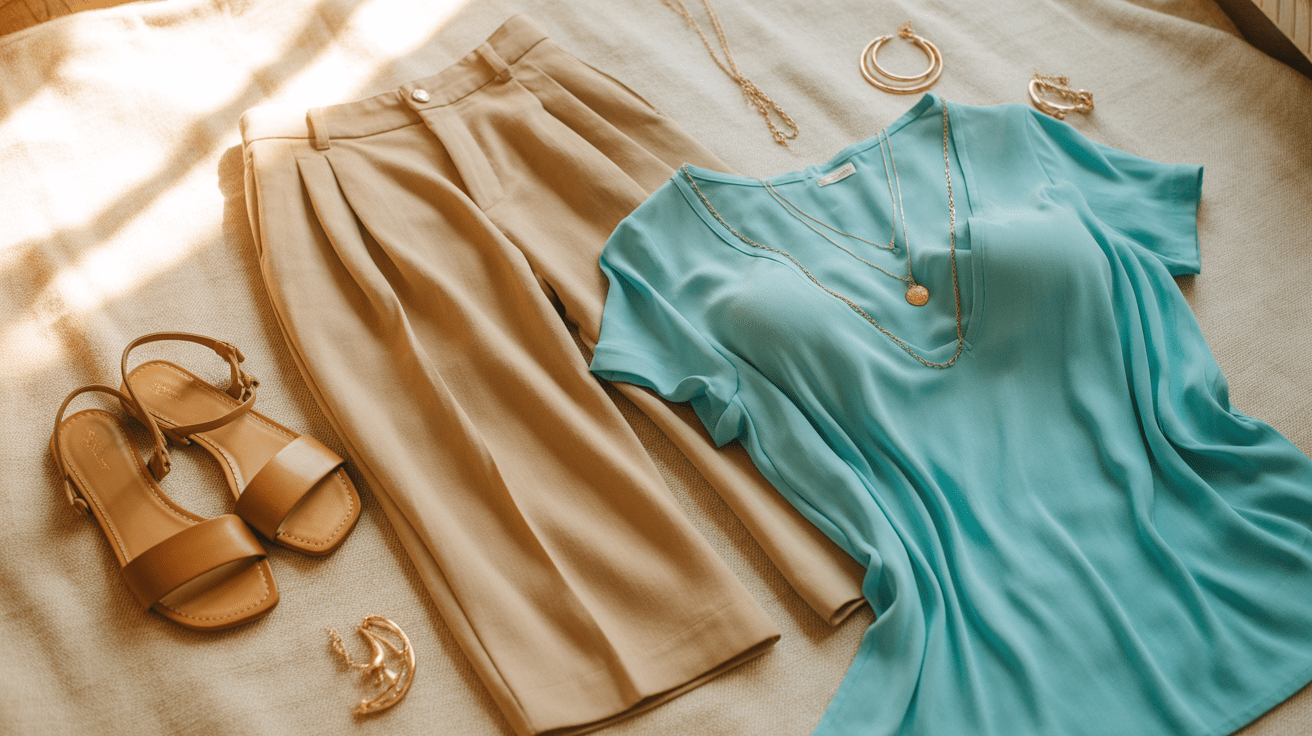
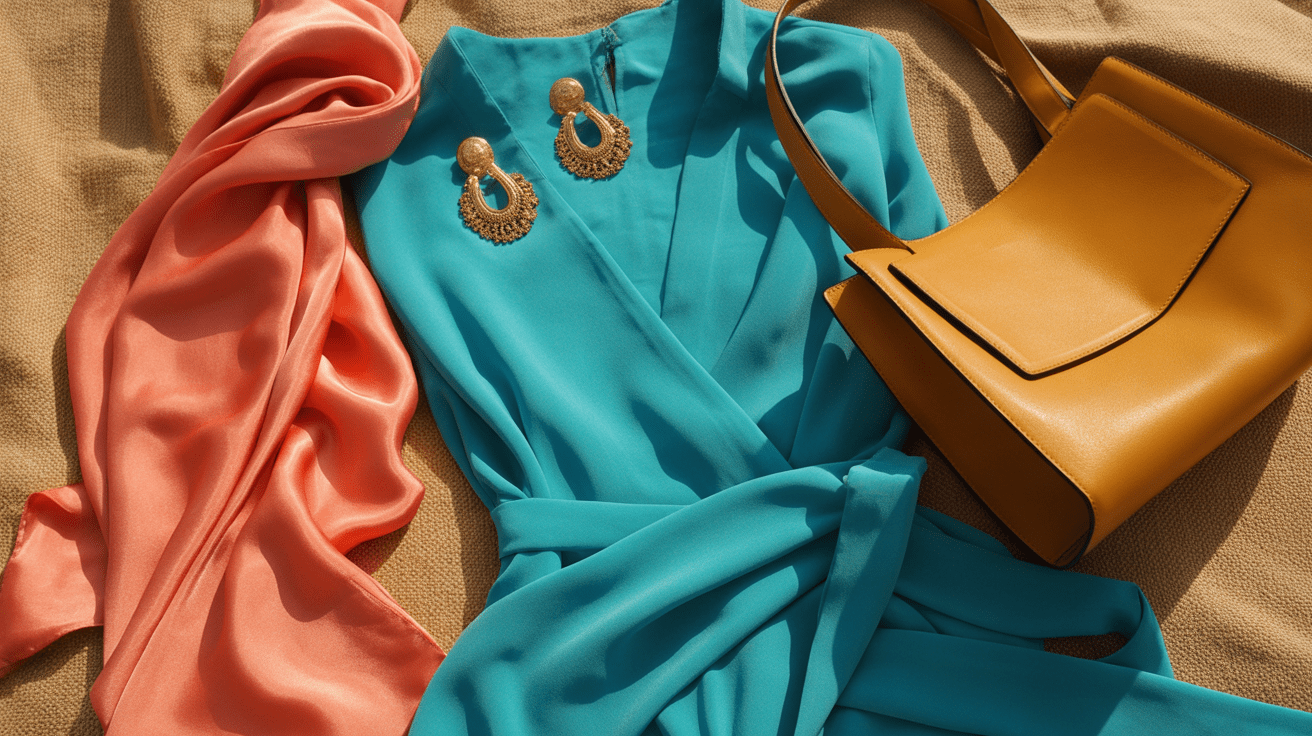
I personally gravitate toward turquoise, coral, deep purple, and warm reds because I live on the water and those colors feel like home to me. They also happen to photograph beautifully and make me feel alive when I put them on which is reason enough.
Your colors might be completely different and that is exactly the point. Find yours and wear them without apology.
The world has enough beige. Be the color.
Rule 4: The Right Undergarments Change Everything
I know. Nobody wants to talk about this one.
We are talking about it anyway because it might be the most important practical rule on this entire list and it is the one women skip over most consistently. You can have the most beautiful outfit in the world and the wrong bra will ruin every single bit of it.
This is not about vanity. This is about structure. The right undergarments give your clothes something to hang on properly. They smooth out the places where fabric likes to bunch or pull. They change your posture, your silhouette, and honestly your confidence in ways that nothing else in your closet can touch.
Here is something that surprises most women when they hear it. The majority of women are wearing the wrong bra size right now. Not slightly wrong. Significantly wrong. Band too loose. Cup too small. Straps doing all the work they were never meant to do. And they have been wearing it so long it just feels normal.
It is not normal. And a proper fitting changes everything.
What to look for in undergarments for women over 70:
- Get professionally fitted if you have not done it recently. Your size has almost certainly changed and most department stores and specialty lingerie shops offer this for free.
- Look for bras with wider bands and full coverage cups that actually support without digging in or creating that dreaded double effect at the top of the cup.
- Seamless underwear and smoothing shapewear are not about hiding your body. They are about giving your clothes a clean foundation to work from.
- Camisoles and layering pieces with built in support are a game changer for women who want coverage and comfort without the structure of a traditional bra.
- Fabric matters here too. Breathable cotton and moisture wicking materials make a real difference in comfort throughout the day especially in warm climates.
I live in Florida heat for most of the year so breathable and comfortable are non-negotiable for me. But comfortable does not mean I am not paying attention to fit and foundation. Those two things live together just fine once you find the right pieces.
Spend the time on this one. It is the least glamorous rule on this list and the one that will have the most immediate visible impact on every single outfit you own.
Rule 5: Invest in a Few Great Pieces Instead of a Closet Full of Mediocre Ones
I used to shop the way a lot of women shop. A little of this, a little of that, whatever was on sale, whatever caught my eye in the moment. I had a full closet and nothing to wear. Sound familiar?
It took me longer than I care to admit to figure out that the problem was not quantity. It was quality and intention.
There is a version of getting dressed that feels easy and a version that feels like a frustrating puzzle every single morning. The difference almost always comes down to whether your wardrobe was built on purpose or just accumulated over time.
Building on purpose means slowing down and asking different questions before you buy something. Not “do I like this?” but “does this work with three other things I already own?” Not “is this a good deal?” but “will I still love this in two years?” Not “is this trendy?” but “is this me?”
When you start asking those questions you naturally start buying less and choosing better. And your closet starts to actually work for you instead of overwhelming you every time you open it.
What intentional wardrobe building looks like in practice:
- Identify your five to eight most worn pieces right now. Those are your anchors. Everything new you add should work with at least two of them.
- Stop buying things just because they are on sale. A bad purchase at 60 percent off is still a bad purchase.
- Choose natural fabrics where your budget allows. Linen, cotton, silk blends, and quality knits drape better, last longer, and feel better against your skin as you get older.
- Look for versatile pieces that transition easily from casual to dressed up with a simple swap of shoes or jewelry.
- Give yourself permission to spend more on the things you wear constantly and less on the things you wear occasionally.
This is where I want to say something honest about Chico’s because it is genuinely relevant here. Their pieces are not the cheapest option on the rack. But the quality, the cut, and the versatility mean that one well chosen Chico’s jacket or trouser works in more situations and lasts longer than three cheaper alternatives. That math works out in your favor every time.
A smaller wardrobe full of things you love is one of the quiet luxuries of this season of life. You have earned the right to stop settling.
Rule 6: Accessories Are Where the Magic Happens
If fit is the foundation and color is the personality, accessories are the exclamation point.
This is the part of getting dressed that I genuinely look forward to every single morning. It is where an outfit goes from fine to fabulous. Where something simple becomes something memorable. And the best part is that accessories are almost always the most affordable way to completely transform what you already own.
I am a big believer in bold jewelry. Statement earrings. A gorgeous chunky necklace. A stack of bangles that make a little noise when you move. Not because more is always more but because the right piece of jewelry near your face draws the eye up, adds personality, and does something for your whole presence that no amount of fabric can replicate.
Women over 70 have a tendency to downsize their jewelry when they should be doing the opposite. Delicate, tiny pieces can get lost. A strong earring or a beautiful necklace with weight and presence actually works with silver and white hair in a way that is incredibly striking. You have the most interesting hair in the room. Let your jewelry rise to meet it.
How to use accessories to elevate your style in your 70s:
- Invest in two or three signature jewelry pieces that feel unmistakably like you. Wear them often enough that they become part of how people recognize you.
- Scarves are endlessly versatile and one of the most underused accessories for women over 70. Wear them around your neck, tied to a bag, wrapped in your hair, or draped over a shoulder.
- A quality leather handbag in a rich color does more for an outfit than almost anything else. You do not need many. You need the right one.
- Belts can define a waist and add polish to oversized pieces but only when they fit properly and feel comfortable. Never sacrifice comfort for structure.
- Sunglasses are a statement piece in their own right especially in a sunny climate. A great pair frames your face and adds an effortless polish to even the most casual outfit.
Living in the Florida Keys means I am in the sun constantly and my sunglasses are as much a part of my daily outfit as anything else I put on. I treat them accordingly.
Accessories are also where you can take the most creative risks. You can try a trend in earring form for twenty dollars without overhauling your wardrobe. You can express a mood, a season, a moment without committing to a whole new look. They are the most forgiving and the most fun part of getting dressed.
Use them boldly.
Rule 7: Comfortable Does Not Have to Mean Boring
Let me say something that I think gets misunderstood a lot when people talk about dressing in your 70s.
Comfort is not a consolation prize.
Somewhere along the way, comfort got associated with giving up. With elastic waistbands, shapeless tunics, and shoes that look like medical equipment. And I understand why women surrender to that eventually, because when your feet hurt, or your clothes are restrictive, or nothing feels good on your body, you stop caring. The joy goes out of it.
But that is a false choice. You do not have to choose between feeling good and looking good. That is an old story, and it is not true anymore.
The fashion industry has genuinely caught up with what women over 70 actually need. Fabrics have evolved. Cuts have gotten smarter. Shoe design has come a long way from the days when a comfortable shoe meant an ugly shoe. You can have both now and there is absolutely no reason to settle for anything less.
The key is knowing what to look for and where to find it.
How to find the sweet spot between comfort and style:
- Look for fabrics with a little stretch blended in. A cotton with two percent elastane, a ponte knit, a soft jersey. These fabrics move with your body, hold their shape through the day, and never feel restrictive.
- Ponte knit pants and trousers are one of the best kept secrets in women’s fashion over 70. They look polished and put together, but feel like wearing nothing at all. I wear mine constantly.
- For shoes, look at brands that engineer comfort into stylish silhouettes. Cushioned insoles, wider toe boxes, and low block heels give you stability and support without sacrificing the look of a real shoe.
- Waistbands matter more than we talk about. A pull-on pant with a wide comfortable waistband looks just as clean and polished as a zip fly when it is well made. Do not let anyone make you feel like pull-on means you have given up.
- Layers are your best friend for both comfort and style. A light cardigan, a duster, a longline vest — these pieces let you control your temperature, add visual interest, and always look intentional.
I live in Florida heat, and I still manage to look put together every day because I have learned which fabrics breathe, which silhouettes work in humidity, and which shoes I can actually walk in without paying for it later.
Comfort is not the opposite of style. Discomfort is not a sign of effort. The most stylish women I know are the ones who have figured out how to feel wonderful in their clothes and look incredible at the same time.
That is the goal. Hold out for it.
Rule 8: Know Your Colors and Your Body — and Stop Guessing
There is a difference between dressing well in general and dressing well for you.
General is fine. Specific is transformative.
Most women spend years guessing. They buy something because it looked amazing on a mannequin, a friend, or someone in a magazine, and then stand in the dressing room wondering why it does not look the same on them. That guessing game is exhausting and expensive and completely unnecessary once you take the time to actually learn two things about yourself.
Your season and your shape.
Your season refers to the undertone of your skin and which color palette genuinely flatters you, versus which one drains you. This is not about what colors you like. It is about what colors make your skin glow, your eyes pop, and your face look alive. Women with warm undertones tend to shine in earthy, rich tones, warm reds, and golden yellows. Women with cool undertones tend to look stunning in jewel tones, true blues, and crisp whites. Women with silver or white hair often find their whole palette shifts, and the colors that worked for them in their forties simply do not perform the same way anymore.
Getting a color analysis done, even informally, can completely change the way you shop and the way you feel in your clothes.
Your shape is about understanding your proportions and which silhouettes balance and flatter your specific body. Not your body type from twenty years ago. Your body right now, today, as it actually is.
How to start dressing for your actual colors and body:
- Hold different colored fabrics up near your face in natural light and watch what happens. Some will make you look tired. Others will make you look like you just came back from a fantastic vacation. That difference is your answer.
- Look for clothes that balance your proportions. If you carry more weight through the middle, a top with visual interest draws the eye up. If you have narrow shoulders, structured shoulder seams add presence. Work with your proportions rather than against them.
- Pay attention to necklines. The right neckline frames your face and neck beautifully. V-necks tend to be universally flattering. Boat necks work beautifully on broader shoulders. Crew necks can close in a face if they are not balanced by the right earring or necklace.
- Stop buying things in colors that are on sale if they are not your colors. A great price on the wrong shade is still the wrong shade.
- Revisit your color palette now if you have gone silver or white. It is one of the most common and most fixable wardrobe disconnects for women in their 70s.
Once you know your colors and your proportions shopping becomes faster, easier, and so much more satisfying. You stop bringing things home that do not work. You stop standing in front of a full closet feeling like you have nothing to wear.
You just know. And knowing is everything.
Rule 9: Confidence Is the Most Important Thing You Put On
We have talked about fit and color and fabric and accessories, and all of it matters. But none of it matters as much as this.
The most stylish woman in any room is almost never the one in the most expensive outfit. She is the one who walks in like she belongs there. Like she chose every single thing she is wearing on purpose, and she is completely at peace with that choice. That energy is visible. People feel it before they can even articulate what they are responding to.
That is confidence. And it is available to every single one of us, regardless of what we are wearing.
I want to be honest about something, though, because I think it would be easy to read that and think confidence is just a personality trait you either have or you do not. That is not true. Confidence in how you look is a skill. It is built. It is practiced. And it is directly connected to whether you are dressing in a way that feels authentic to who you actually are.
When you are wearing something that does not feel like you, your body knows it. You pull at it. You check the mirror too many times. You feel slightly off all day in a way you cannot quite name. That low grade discomfort quietly chips away at how you carry yourself.
When you are wearing something that is completely you, something that fits right and feels right and looks like you chose it on purpose, something shifts. You stop thinking about what you are wearing and start just living in it. That is the goal. That is what we are building toward with every single rule on this list.
How to build genuine confidence in the way you dress:
- Stop waiting until you lose weight, feel better, or have more money to dress well. Dress for the body and the life you have right now today. That decision alone changes everything.
- Wear things that generate compliments and notice how those pieces make you feel. Then buy more things that feel the same way.
- Get rid of anything in your closet that makes you feel bad when you put it on. Life is too short for clothes that drain you.
- Practice receiving compliments graciously. Say thank you and mean it. Do not deflect or minimize. You put thought into how you look and that deserves acknowledgment.
- Remember that nobody is paying as much attention to your outfit as you are. The things you obsess over in the mirror are invisible to everyone else. Wear the thing. Go live your life.
I am 78 years old and I have exactly zero patience left for the voice that says I should want to take up less space or be less visible or want less for myself. That voice is wrong and it has always been wrong.
You are not too old to look incredible. You are not too old to care. You are not too old for any of it.
Put on something that makes you feel like yourself and walk out the door like you own the place.
Because you do.
Rule 10: Build a Wardrobe That Travels With You
I have lived in the Florida Keys for over thirty years. Before that I lived in Houston. I have traveled more than most people I know and I plan to keep doing it for as long as my legs will carry me.
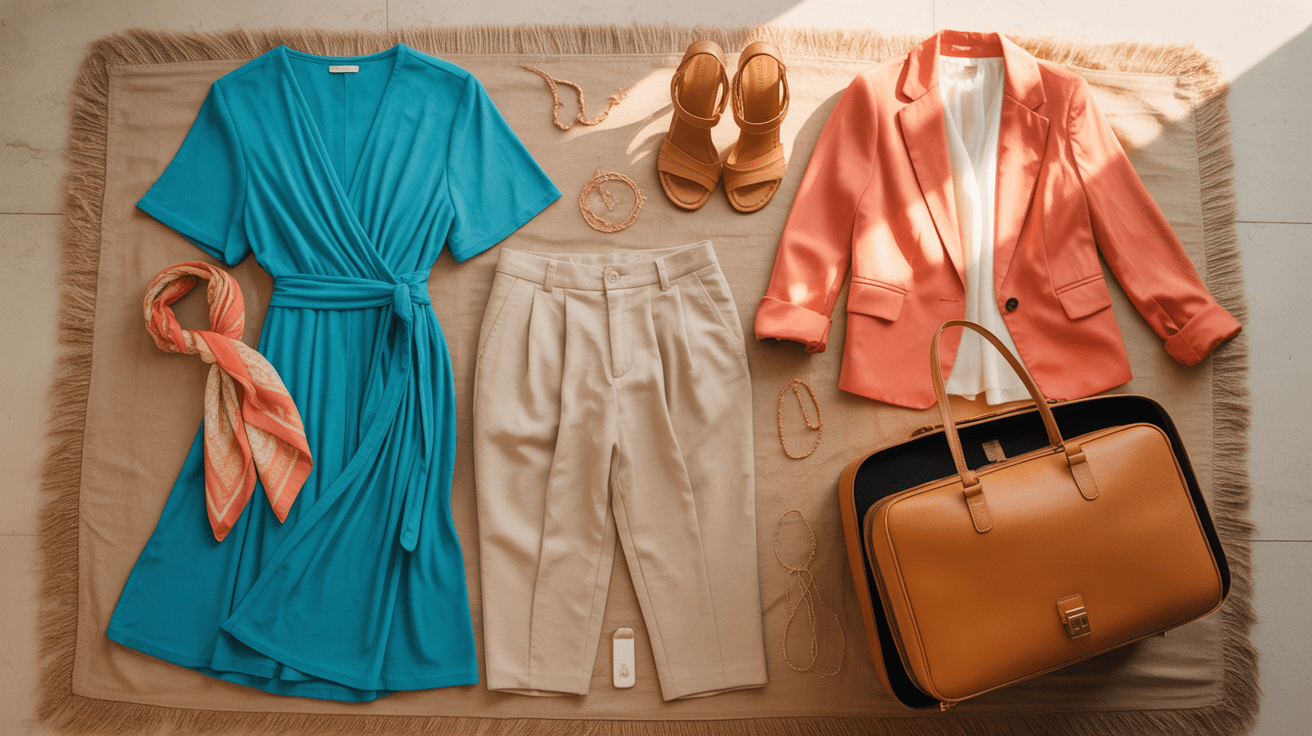
Living a life that moves around, whether that means actual travel or just a life that shifts between different settings and occasions, taught me something important about building a wardrobe. The pieces that earn their place are the ones that work in more than one context. The ones that pack well, arrive unwrinkled, transition easily from daytime to evening, and feel just as right at a waterfront restaurant as they do on a long flight or a lazy Sunday morning.
A wardrobe that travels with you is not just about literal travel. It is about versatility. It is about having pieces that work as hard as you do and show up reliably in whatever situation life puts you in next.
This is actually where investing in quality pays off most visibly. Cheap fabric does not travel well. It wrinkles, it pills, it loses its shape. A well made linen blend or a quality ponte knit comes out of a suitcase looking like it was just pressed. That difference matters when you are standing in a new city trying to feel put together and confident.
How to build a wardrobe that is ready for anything:
- Choose a cohesive color palette across your wardrobe so that everything works with everything else. When every piece in your suitcase can mix and match with every other piece you can pack lighter and still have a full week of outfits.
- Prioritize wrinkle resistant fabrics. Ponte knit, jersey, linen blends, and traveler’s knit fabrics are your best friends on the road and honestly in everyday life too.
- Think in outfits not individual pieces. Before you buy something ask yourself what three things in your current wardrobe it works with. If you cannot name three things put it back.
- Have a great travel bag and a great everyday bag. Not ten bags. Two excellent ones that work for your life and go with everything.
- Shoes take up the most suitcase space and cause the most foot regret when chosen poorly. Pack shoes that are comfortable enough to walk in all day and polished enough to wear to dinner. Two pairs that do both jobs well beat five pairs that each only do one.
- Include one piece that makes you feel really special. A beautiful blouse, a favorite necklace, something that makes you feel like the best version of yourself, even when you are far from home. Every trip deserves at least one moment like that.
Living on the water means my wardrobe has to work in heat, in humidity, on boats, at beach bars, and at nice dinners sometimes all in the same day. I have gotten very good at finding pieces that are up for all of it.
Your life may look completely different from mine. But the principle is the same. Build a wardrobe that can keep up with you. Because you have places to go and things to do and people to see, and your clothes should be helping you do all of it, not holding you back.
Dress for the life you are living. And then go live it.
You Have Earned Every Single Year of This
Here we are at the end of the list, and I want to leave you with something that feels true to me in a way that goes beyond fashion.
Getting dressed every morning is a small act of self respect. It is five or ten minutes you spend honoring the body you live in and the life you are showing up for that day. It does not need to be complicated or expensive or perfectly on trend. It just needs to feel like you.
You have spent decades taking care of other people, building things, showing up, doing the work. You have earned the right to take up space. To wear the color. To buy the piece that makes you feel wonderful. To walk into any room with your head up and your jewelry on and not apologize for a single thing about how you look.
Style in your 70s is not about trying to look younger. It is about looking more completely and confidently like yourself than you ever have before. And that is so much better.
I hope something in this list clicked for you today. I hope you close this page and go look at your closet with a little more curiosity and a little less judgment. I hope you try the bold earring or the coral top or the ponte knit pants that feel like pajamas but look like a real outfit. I hope you take up exactly as much space as you want to.
And I hope you come back here often because we are just getting started at Wanda’s Corner.
There is so much more to share.
Save this post to your Pinterest boards so you can come back to it anytime. And if one of these rules hit home for you, share it with a girlfriend who needs to hear it today.
Explore more at wandascorner.com